 Reviews


 Proudly American


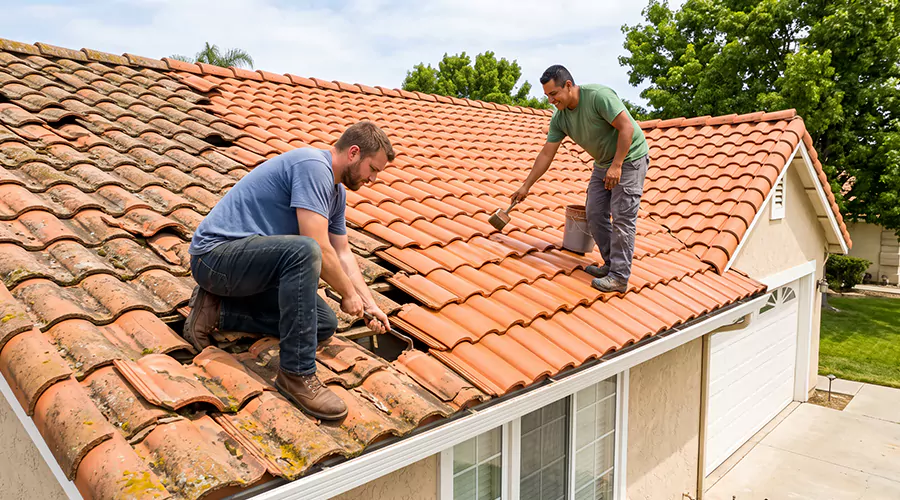
A tile roof should be restored when most tiles remain sound but the roof shows repairable leaks, broken pieces, worn ridge materials, surface buildup, or aging waterproofing details. Ceiling water damage restoration may be needed when roof leaks have allowed moisture to reach ceilings or interior materials. Restoration is most useful before damage spreads into the roof deck. In 2026, many tile restoration projects fall around $2,500 to $5,000 when major structural repairs are not required.
Age alone does not decide when restoration is needed. Underlayment and flashing condition matter as much as the visible tiles.
What Does Tile Roof Restoration Include?
Tile roof restoration repairs weak areas while keeping most of the existing tile system in place. The work usually starts with inspection because cracked tiles may be only one part of the problem. Flashing or ridge details can also allow water to enter.
A typical project may include:
- Inspecting tiles and roof penetrations.
- Replacing isolated broken tiles.
- Correcting loose ridge materials.
- Repairing flashing defects.
- Cleaning suitable roof surfaces.
- Checking drainage paths.
- Applying compatible treatment where appropriate.
What Signs Show a Tile Roof Needs Restoration?
The best time to restore a tile roof is when deterioration is noticeable but still limited enough that most of the roof can remain. Repeated small problems across different sections are stronger restoration signals than one isolated broken tile.
Watch for:
- Several cracked tiles
- Loose ridge or hip tiles
- Recurring minor leaks
- Staining in the attic
- Damaged flashing
- Surface buildup that traps moisture
- Previous repairs in several areas
- Isolated tiles slipping out of position
- Aging sealant around penetrations
Tile roof restoration becomes less attractive when these signs are accompanied by widespread deck damage.
When is a Simple Tile Repair Enough?
A local repair is usually enough when one small area is damaged and the surrounding roof remains in good condition.
| Roof Condition | Better Starting Point |
|---|---|
| One or two broken tiles | Local repair |
| Isolated flashing defect | Local repair |
| Several minor problems | Restoration may help |
| Widespread surface deterioration | Restoration |
| Rotted roof deck | Larger repair or replacement |
| Major structural sagging | Structural evaluation |
Restoration makes more sense when maintenance problems are becoming widespread rather than isolated.
Why Does Underlayment Matter So Much?
Tile is the visible outer layer, but the waterproofing system beneath it plays a major role in keeping the building dry. A roof can therefore look good from the ground while aging underlayment is allowing moisture into the structure.
Warning signs of hidden waterproofing problems include:
- Ceiling stains after rain.
- Damp attic insulation.
- Moisture near roof penetrations.
- Repeated leaks beneath intact tiles.
- Stains on roof decking.
- Musty attic odor.
A surface-only treatment cannot renew failed waterproofing beneath the tile.
When is a Tile Roof Too Damaged to Restore?
Restoration is a poor choice when large structural areas have failed or the roof needs extensive removal to reach damaged components. Replacing many tiles individually can also become uneconomical if the surrounding materials are already near failure.
Replacement or larger reconstruction deserves consideration when:
- Decking is rotted across broad areas.
- Roof sections sag.
- Many tiles are broken or missing.
- Underlayment has failed extensively.
- Structural framing is damaged.
- Leaks keep returning after repeated repairs.
- Large areas must be removed to reach the problem.
Roof restoration should extend a usable system rather than cover a failing one.
How Much Does Tile Roof Restoration Cost?
In 2026, tile roof restoration commonly costs around $2,500 to $5,000 for many residential projects.
Roof restoration cost can also increase when underlayment or flashing needs substantial repair.
| Work Needed | Effect on Cost |
|---|---|
| Cleaning and inspection | Lower |
| Isolated tile replacement | Moderate |
| Ridge repairs | Moderate |
| Flashing correction | Moderate to higher |
| Underlayment work | Higher |
| Deck repair | Much higher |
A quote should clearly separate surface work from repairs beneath the tiles.
How Long Can Restoration Extend Tile Roof Life?
A suitable restoration can often add about 5 to 15 years of useful service. The actual period depends on the condition of the waterproofing layers and how much repair work is completed before the roof is renewed.
What Can You Check Yourself?
You can perform a useful inspection without walking on the tiles. Tile roofs can crack under foot traffic, especially when tiles are brittle.
From the ground or a safe window, look for:
- Missing tiles.
- Pieces that have slipped.
- Cracked ridge tiles.
- Uneven roof sections.
- Debris blocking valleys.
- Damaged flashing.
- Areas that look different after repairs.
Inside the attic, check for new stains after rain if access is safe.
When Should You Call a Professional?
Professional assessment is appropriate when leaks occur beneath tiles that look intact or when several roof sections need repair. A closer inspection can determine whether the issue is limited to tiles or extends to underlayment.
Consider professional help when:
- Several leaks occur.
- Many tiles are cracked.
- The roof is unsafe to access.
- Underlayment failure is suspected.
- Decking appears damp.
- Roof sections sag.
- Previous repairs keep failing.
How Can You Delay the Next Restoration?
Routine maintenance can help a tile roof stay serviceable longer. The main goal is to find broken pieces and drainage problems before water reaches the layers below.
Use this routine:
- Inspect from the ground twice a year.
- Check after major storms.
- Keep gutters and valleys clear.
- Replace isolated damaged tiles promptly.
- Repair flashing defects early.
- Watch attic areas after heavy rain.
- Limit unnecessary roof traffic.
Conclusion
A tile roof should be restored when most tiles remain sound but several repairable problems are developing across the system. Cracked tiles or flashing defects can often be corrected before the roof deck suffers larger damage. Underlayment condition is especially important because a roof may look sound from outside while leaking underneath. If recurring leaks or widespread deck damage appear, professional assessment can determine whether restoration still makes sense.
Frequently Asked Questions
Does an old tile roof automatically need restoration?
No. Age is only one factor. The condition of tiles and waterproofing layers matters more.
Can broken roof tiles be replaced individually?
Yes. Isolated broken tiles can often be replaced without restoring the entire roof.
How long can tile restoration last?
A suitable project can often add about 5 to 15 years of usable service.
Does restoration replace the underlayment?
Not always. Underlayment work should be listed separately when it is part of the project.
Can a leaking tile roof be restored?
Often, when the leak source is repairable and the supporting roof remains sound.
Should you walk on tile to inspect it?
Avoid unnecessary foot traffic. Some tiles can crack under weight, so ground-level inspection is safer for routine checks.